

If facility work has landed on your desk and outgrown the role, the conversation with leadership is not a request for help. It is a proposal to put a structure under work that already exists. Fractional facilities management supplements your role: you keep the authority, the relationships you value and the reporting line, and a governance layer carries the vendor coordination, the condition record and the documentation.
The pattern is the same whatever your title. The work arrived gradually: one vendor, then a second building, then the insurance renewal that asked for documentation nobody had. By the time it feels unsustainable, the conversation carries frustration, and leadership hears a staffing request. What changes from role to role is what you stand to gain, so start with yours.
Start with your role
- Office managerGet your days back for the people and the office.Read the guide →
- HRRoute building complaints to an owner and hold every vendor on site to a standard.Read the guide →
- Executive assistantHand your executive decisions instead of interruptions.Read the guide →
- Facility managerPut your hours on the capital plan, not the walkthrough.Read the guide →
- Practice managerKeep patient spaces running across every location.Read more →
- Center directorSpend the week with families and staff, not vendors.Read more →
Leadership is not resisting help. It is weighing an unscoped request against a budget that already exists. A proposal that names the scope, the risk and the first step gets a different hearing than one that names the strain.
Start with an inventory, not an ask
Before the meeting, write down every facility task you touch for four weeks. Not a summary. The actual list: the vendor follow-up, the invoice you could not verify, the certificate of insurance you chased, the repair request you triaged, the capital question you could not answer. Note roughly how often each one happens and what it displaced.
The four-week inventory
Task
How often
What it displaced
HVAC vendor scheduling and follow-up
How oftenWeekly
DisplacedCore work moved to the evening
Invoice review without a scope to check against
How oftenTwice a month
DisplacedInvoices approved on trust
Certificate of insurance and license tracking
How oftenMonthly
DisplacedRenewals caught late
Staff and tenant repair requests
How oftenDaily
DisplacedInterrupted meetings and follow-ups
The inventory does two things. It turns a feeling into a document leadership can read, and it shows you which parts of the work you want to keep. Many people keep the vendor relationships they built and hand over the scheduling, the follow-up and the record keeping.
Translate the strain into leadership's terms
Leadership weighs facility decisions in a few currencies: risk, cost visibility, continuity and the output of the roles it already pays for. The same problem reads differently in each.
The same problem, two framings
What it feels like
What leadership hears
What it feels likeI am buried in vendor calls.
What leadership hearsFacility coordination is absorbing time from a role hired for other work.
What it feels likeNobody is watching the HVAC.
What leadership hearsPreventive work is unscheduled, so repairs arrive at reactive prices.
What it feels likeI do not know what the building needs.
What leadership hearsThere is no documented condition record to plan capital against.
What it feels likeIf I am out, nothing gets done.
What leadership hearsFacility knowledge lives with one person, and it leaves when they do.
What it feels likeInsurance keeps asking for things.
What leadership hearsDocumentation requests arrive faster than the record can answer them.
None of the right-hand column is a complaint. Each line names a structural gap leadership can act on. If you carry facility scope as an office manager, we have also written about what that scope quietly costs and what happens to it when the person carrying it leaves.
Make it clear this supplements your role
The fastest way to lose the room is to let leadership hear “replace.” Fractional facilities management is not a substitute for the person who knows the building. It is a scope reallocation: the governance work moves into a structured lane, and you direct it.
You keep
- Authority over scope and priorities
- The vendor relationships you want to keep
- The reporting line to leadership
- The narrative: your data, your name
The fractional layer carries
- Vendor scheduling, follow-up and scope verification
- Facility Condition Assessments and the condition record
- Invoice review against the agreed scope
- Capital planning documentation
- Ownership-facing reporting
For in-house facility managers, we cover how that reporting structure works in more depth in FM for FMs.
Bring a first step, not a program
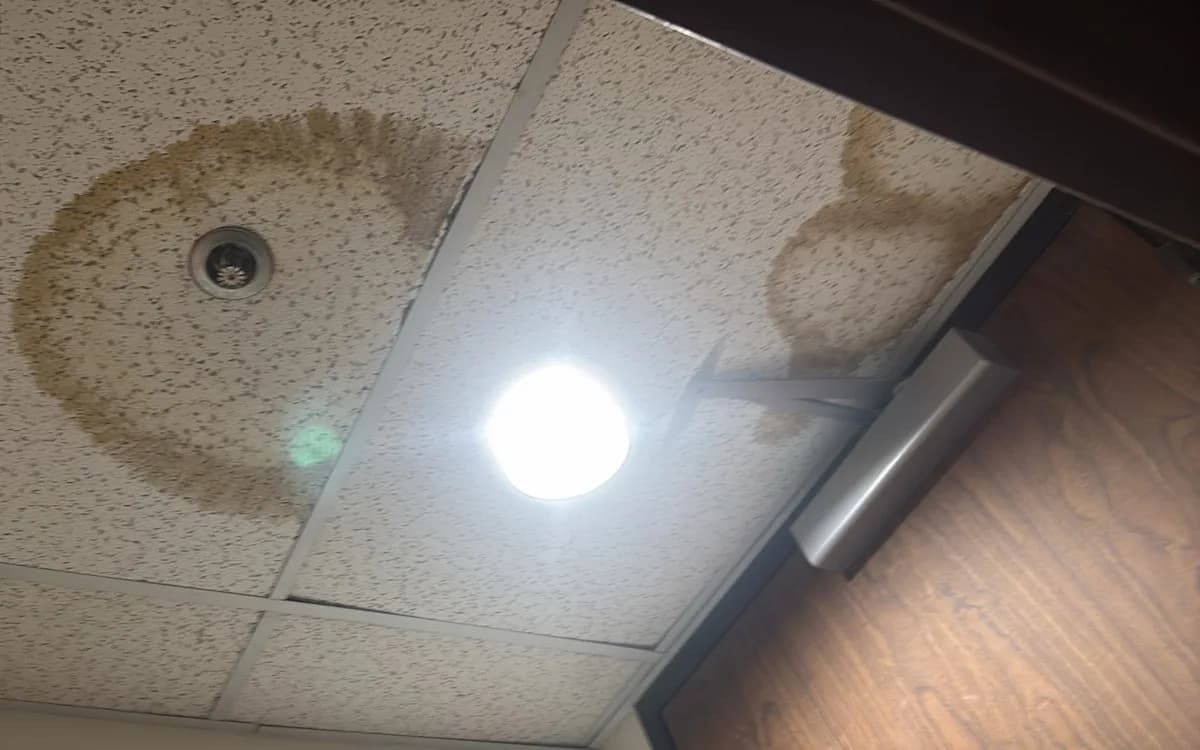
A proposal that asks for a standing engagement on day one asks leadership to buy something it has not seen. A proposal that asks for one Facility Condition Assessment asks for a document. The assessment records observable condition with photos, tiers each finding and attaches a planning cost range, so leadership reads the building's condition in writing before deciding anything else. The ranges are planning estimates, not quotes.
From there, the scope of any ongoing work comes from the findings, not from a guess. Pricing is confirmed in writing in the engagement proposal. If leadership wants to see the format first, the sample report is the page to send.
Answer the questions leadership will ask
What does it cost?
It is scoped to the actual workload and confirmed in a written proposal. The comparison that matters is against the cost already being absorbed: deferred items, invoices approved without a scope to check them against, and time pulled from other work.
Does this replace anyone?
No. It sits under the person who knows the building and takes the governance work off that desk.
What happens to our vendors?
Vendors you want to keep stay. They can remain under your own contracts, or coordination can run through Proportional FM. Either way, scope and invoices are checked against the work.
How will we know it is working?
Findings close, the condition record stays current, and the answer to “what does the building need?” is a document.
A sequence that works
- Step oneKeep the four-week inventory. It is the evidence.
- Step twoWrite one page for leadership. The scope you carry, what it displaces, and the risk in leadership's terms.
- Step threePropose a single Facility Condition Assessment. The next decision then rests on a documented baseline.
- Step fourSet the ongoing scope from the findings. You direct it; the fractional layer carries it.
If the facility work on your desk has outgrown the role, the strongest case is the one that protects the role. Leadership does not need to be convinced that the building matters. It needs a scoped way to act on it.