
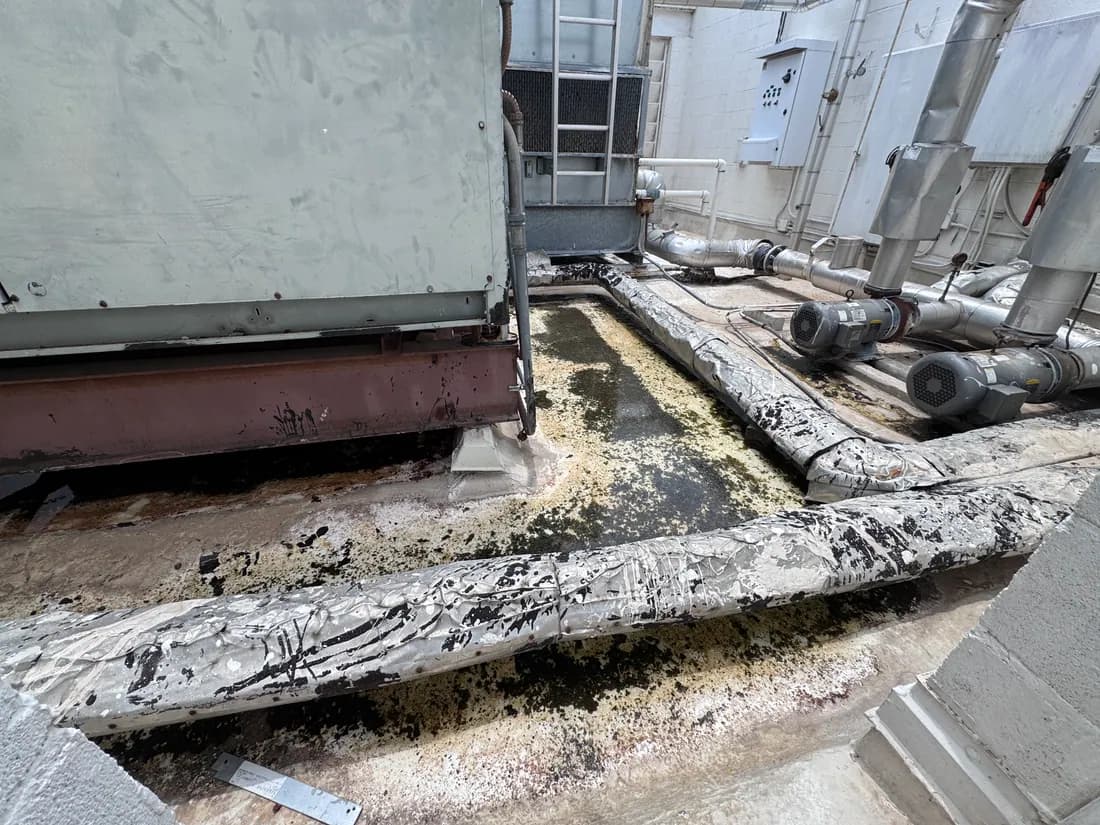
Some commercial leases in Dallas-Fort Worth make the tenant responsible for the heating and cooling equipment that serves its suite. When the suite is served by rooftop package units, that clause hands the tenant the most expensive equipment in the space and the hardest equipment to see. Nobody tours a suite from the roof.
The fix is simple to describe: before you take occupancy, have the units assessed by a licensed mechanical contractor, and keep the written result with your lease file. This guide covers why a walk-through is not enough, what an independent assessment records, and how to get the access arranged so the visit happens.
A note on scope: this is not lease advice. Your lease decides who is responsible for the equipment, and your attorney interprets it. The assessment gives you facts to bring to that conversation.
What a condition walk can tell you, and where it stops
A suite condition assessment documents what is visible. At the units that usually means rust on the cabinet base, staining in or below the drain pan, damaged or missing access panels, deteriorated insulation on the lines, and water where it should not be. Inside the suite it means the thermostats, the supply and return grilles, and the ceiling tiles below the equipment, which often carry the first sign of a drain problem.
Those observations are useful. They are not an equipment assessment. A visual walk records the nameplate as marked and the condition as observed. It does not run the unit, measure how it performs, or say how many years it has left. For a tenant about to own the repair bill, that last question is the one that matters, and it belongs to the licensed trade. Our guide to reading a rooftop package unit covers the visual cues in more detail.
What an independent mechanical assessment records
Scope varies by contractor and by unit, so read the proposal before you approve it. A typical pre-occupancy assessment of the units serving a suite includes:
- Equipment verification. Each unit identified from its nameplate: make, model, serial number, and the refrigerant and capacity as marked, with photographs of the unit and the plate.
- Operational check. The contractor runs the unit through its modes and observes how it starts, cycles, heats and cools, and drains, as far as the season and the equipment allow.
- Observed condition. What the licensed technician sees inside the cabinet: coils, drain pan, belts and motors where present, wiring and connections.
- A written report. Findings, recommended repairs, and the contractor's read on the unit's remaining useful life.
Ask what the operational check can confirm in the current season. Some functions are harder to test in very hot or very cold weather, and a good contractor will tell you which parts of the report rest on running the unit and which rest on observation.
Why independent matters
The point of the record is to have something to measure later events against. If a unit fails in the first summer, the report shows what it looked like and how it ran on the day you took it. If repair work is later called complete, you can compare it to what was documented before. Both conversations go better when the starting record was written by someone who was not also bidding the repair.
It also separates two questions that tend to blur together: what condition the equipment was in, and who is responsible for it. The assessment answers the first. The lease answers the second.
Signs that move a unit to the front of the list
- Water discharging from the unit or pooling around it.
- A stained or sagging ceiling tile below the equipment or below a supply grille.
- Heavy rust at the cabinet base or around the drain pan.
- Unusual noise, odor, or a unit that runs without changing the temperature in the space.
- A thermostat that does not appear to control the unit it is labeled for.
If any of these are present before move-in, photograph them, note the date, and tell the landlord or property manager in writing before the assessment is scheduled.
Arrange roof access first
The most common reason a rooftop assessment does not happen on the scheduled day is access. Roof hatches are locked, and many buildings require the landlord or property manager to approve anyone going on the roof, including a contractor the tenant hires. Ask for that permission in writing, name the contractor, and confirm who will open the hatch and when. Settle it before the visit is booked, not on the morning of.
How Proportional FM handles it
Proportional FM documents the suite and the visible condition of the units serving it with the same method as a full Facility Condition Assessment, described in our guide to a suite condition assessment before you sign. Where the units show signs that call for a closer look, or where the lease makes them yours, we coordinate an assessment by a licensed mechanical contractor, quoted separately so you see the cost before anyone goes on the roof. Both records land in one place. For how lease terms typically split HVAC responsibility, see who pays for HVAC repair under a Texas NNN lease.