
Pest activity in a commercial building rarely shows itself during business hours. The signs collect in the places people stop looking: under sinks, behind break-room appliances, along wall bases in storage rooms, at the back of janitorial closets, and around the doors nobody uses. Occupants walk past them every day. A room-by-room condition walk finds them because it covers every accessible space in the same order, whether anyone thinks there is a problem or not.
A note on scope: a condition assessment documents observable signs. It does not identify species with certainty, measure the extent of activity, treat anything, or offer health or code guidance. A licensed pest control provider does that work.
What a walk documents
Each sign is photographed where it sits, with a note and its location:
- Droppings along wall bases, in cabinets, under sinks, and in storage areas.
- Gnaw marks on wood, plastic, packaging, or wiring insulation.
- Rub marks, the dark smudges rodents leave along routes they travel repeatedly.
- Nesting material: shredded paper, insulation, or fabric gathered in a protected corner.
- Insects collected in light lenses, on window sills, and at door thresholds.
- Traps and bait stations that are damaged, missing, full, or out of place. A trap in disrepair is its own finding.
Entry points and the conditions that invite activity
The signs explain what is happening. The building explains why. A useful assessment records both:
- Gaps under exterior and service doors, and missing or worn door sweeps.
- Openings around pipe and conduit penetrations through walls and floors.
- Damaged weather stripping, gaps at dock and overhead doors, and torn screens.
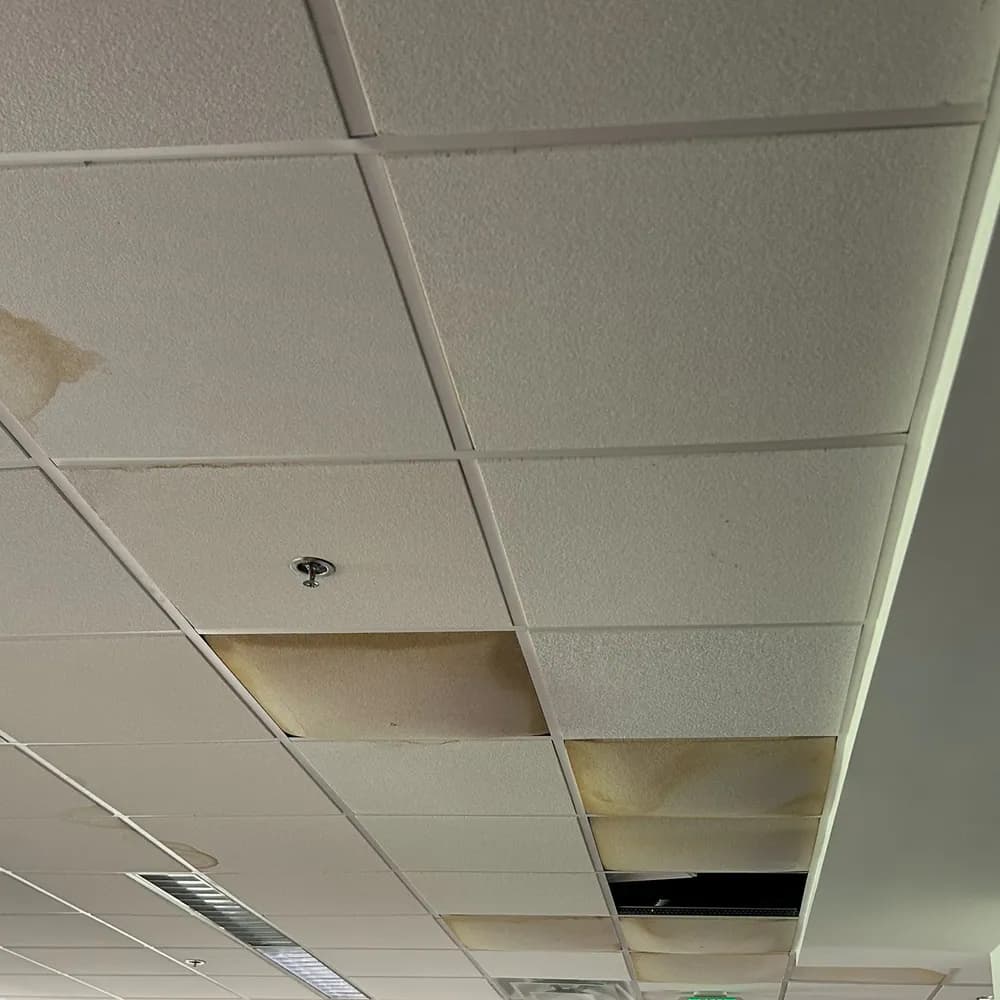
- Moisture: leaks under sinks, condensation, and standing water.
- Food debris in break rooms, and cardboard or stored material stacked against walls.
- On the exterior, vegetation and debris against the building.
Many of these are ordinary maintenance items. Sealing a penetration, replacing a door sweep, or fixing a slow leak under a sink is work a scheduled maintenance visit can handle, and it shrinks the problem a pest provider is treating.
One sign is a note. Many areas is a pattern.
A single sign in one storage room is worth a note and a follow-up. Signs documented in many separate areas of a suite or a floor tell a different story: the activity is not an event, and the answer is likely in the entry points or the program rather than one trap. That is the kind of conclusion an assessment can support and a casual walk-through cannot, because the assessment shows every location side by side.
Suites and common areas are often covered differently
Building pest programs commonly cover the exterior and the common areas, while individual suites are serviced as needed. That split is reasonable, and it creates a blind spot: activity inside a suite can sit outside the routine program until a tenant complains. For a tenant taking a suite, a dated record of what was present on the first day is useful later, which is one reason pest signs appear in a suite condition assessment before you sign. For a landlord, findings in common areas and suites side by side show whether the program boundary still fits the building.
What happens with the findings
- The licensed pest provider receives the findings with their photographs and locations, so the inspection starts where the signs are.
- Entry points and moisture items go to maintenance or the right trade.
- The next walk, or the next scheduled visit, confirms whether the signs are still present.
How Proportional FM handles it
In a Proportional FM Facility Condition Assessment, pest signs are tagged to their own category with a photograph and a location, alongside the entry points and moisture findings that relate to them. Maintenance items can be worked on scheduled visits, and treatment is arranged with a licensed pest control provider through vendor coordination, quoted separately. If it is visible, it is in the report. For turning findings like these into priced work, see turning an assessment into a vendor bid packet.